Sensor Networks · Case Study
Geyser Connect & Sensor Connect App
Save energy and reduce costs.
The result
8,500+
Paying customers, up from ~5,000 in roughly a year
84%
Customer retention rate, up from 80%
16%
Churn, down from 20%
The product moved from concept to a live device shipping through B2B2C insurance channels nationally.
At a glance
The problem
Electric geysers burn 40–50% of household electricity, unmonitored — and a burst geyser is a major insurance liability.
What I built
A smart IoT retrofit device + companion app, taken from zero to a national B2B2C product.
The result
5,000 → 8,500+ paying customers, retention 80% → 84%, churn 20% → 16% in a year.
The problem
Electric geysers are one of the largest single loads in a South African home — 40 to 50% of the average monthly electricity bill. They run unmonitored and unoptimised, contributing to the load-shedding pressure on the national grid. On top of that, a leaking or burst geyser causes real property damage and is a significant cost driver for household insurers.
There was no existing way to retrofit a geyser with intelligence — to control it remotely, optimise its power use, or catch a leak before it became a claim. And the company had no existing product strategy or roadmap in place to build one.
I joined as Sensor Networks' first Product Manager to build that category from scratch.
What I built
1 · Discover
With no prior product function at the company, I started by learning the business goals and customer problems directly, then set the initial strategy: prioritise the work with the highest impact first, rather than trying to do everything at once.
2 · Scope
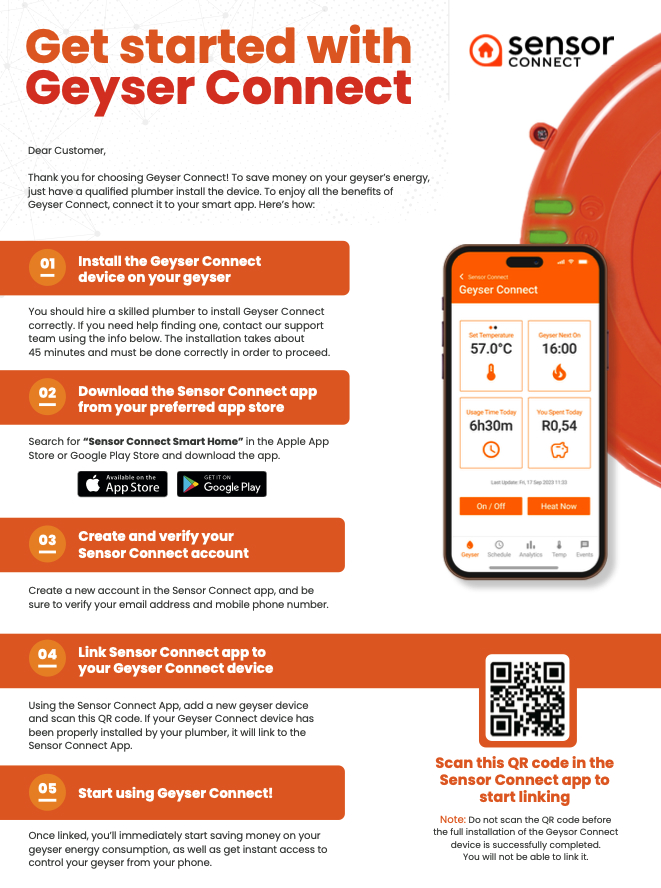
I built the Product Roadmap and OKRs, and mapped the full B2B2C customer journey end-to-end — awareness, controller installation, app onboarding, device linking, subscription, and termination — breaking each step into every realistic scenario, positive and negative, so both customers and support agents always knew where they stood.
3 · Build
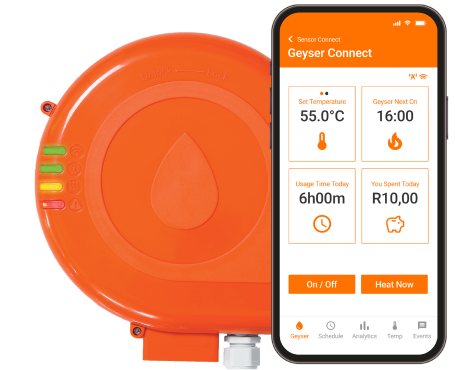
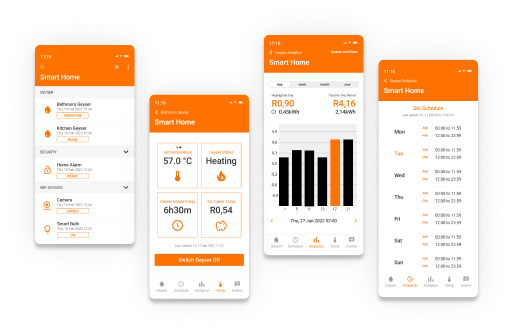
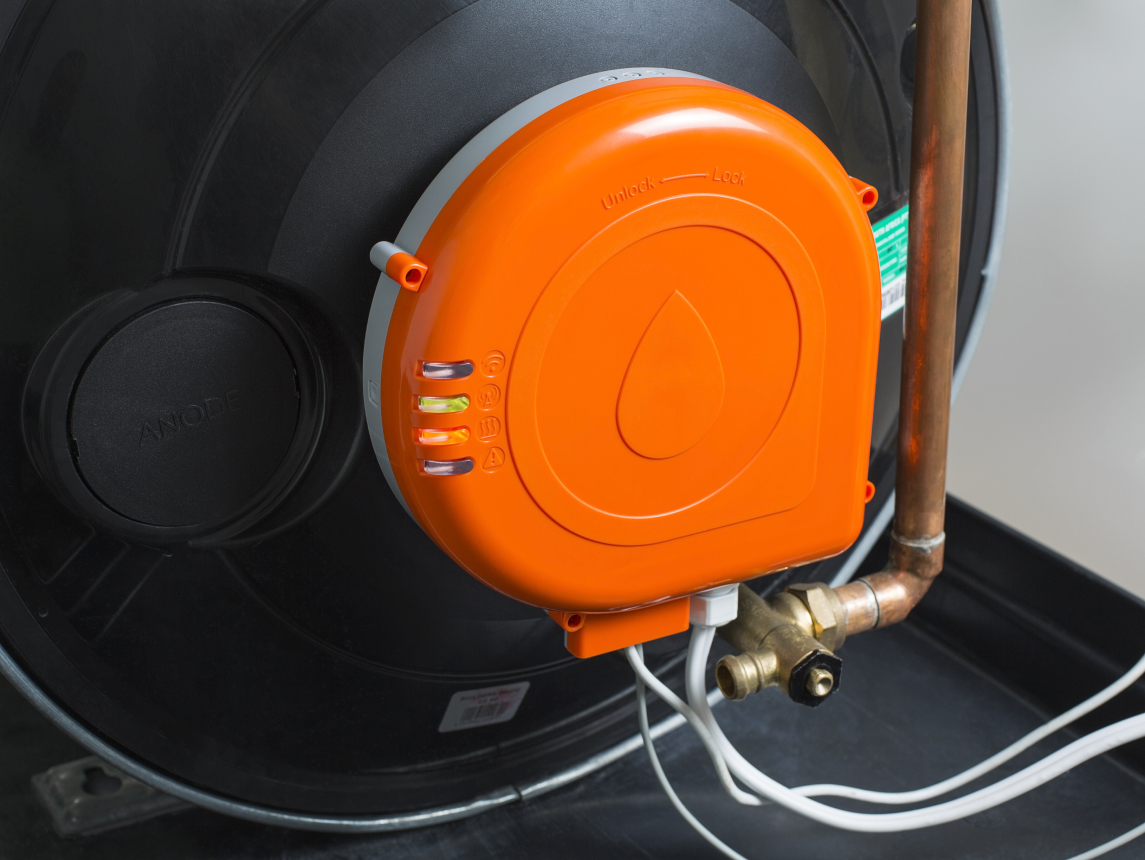
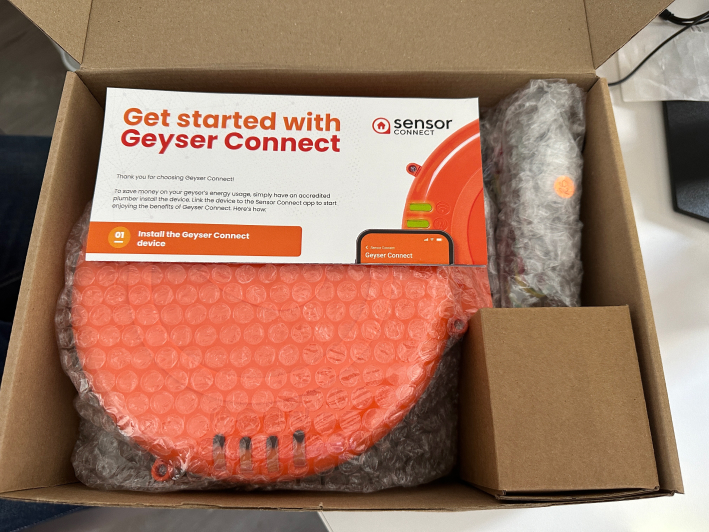
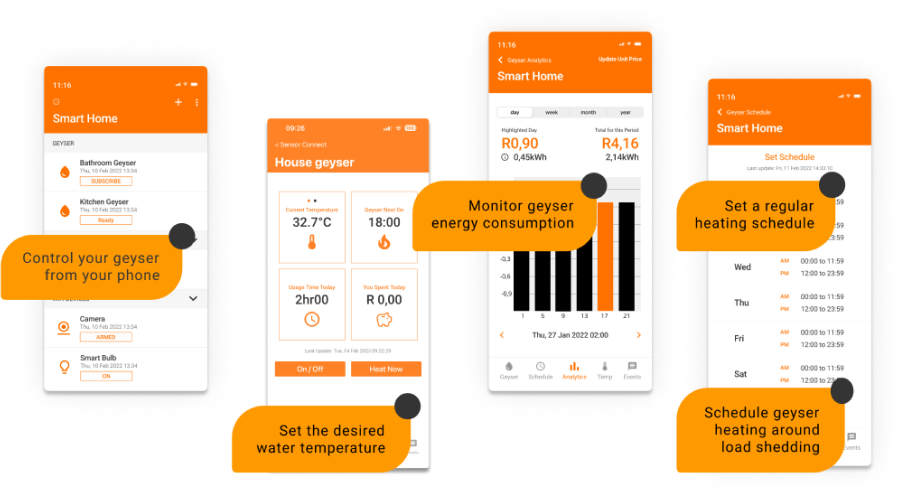
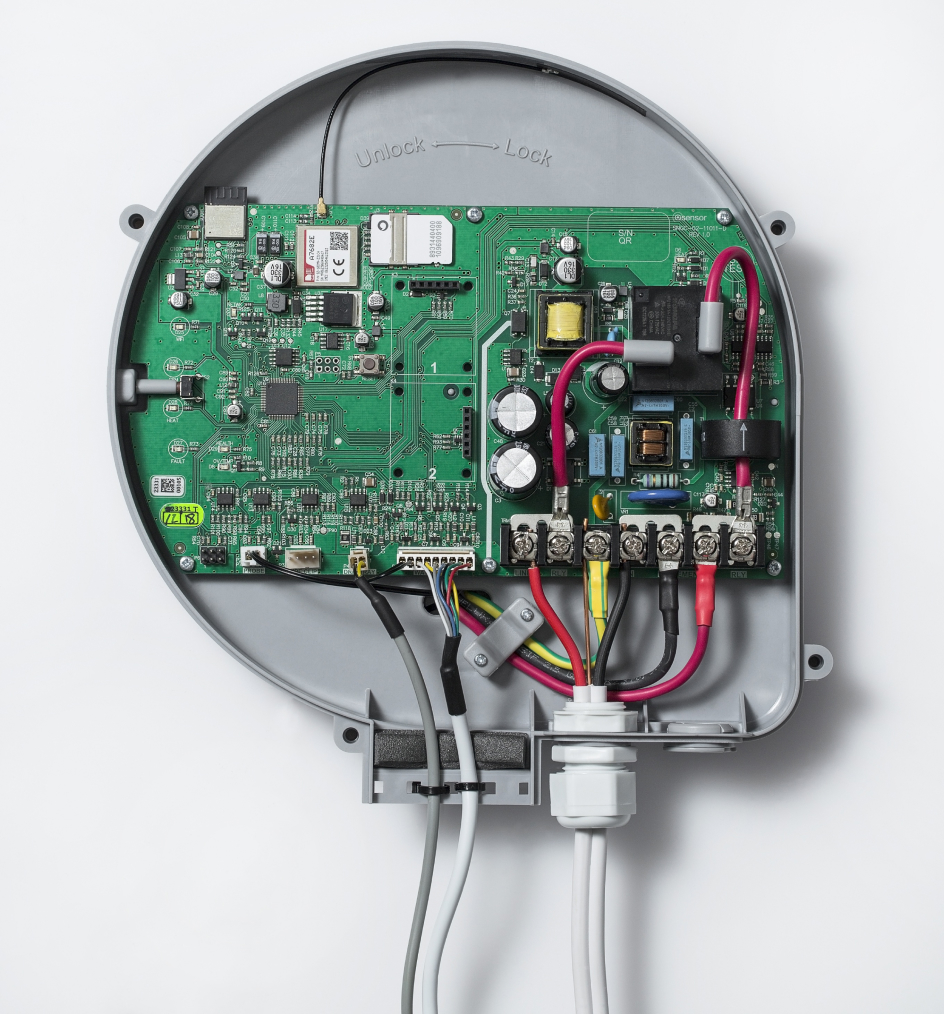
I drove the hardware and software in parallel: the Geyser Connect controller and Smart Valve on one side, the Sensor Connect app on the other. Key features I scoped and shipped: WiFi connectivity, a "Heat Now" on-demand heating trigger (the most-used button in the app), Load-Shedding Heating — a predictive feature built on a third-party API (EskomSePush) that pre-heats water ahead of a scheduled outage — and Homes & Rooms, letting customers with multiple devices organise and manage them properly. I also designed the physical packaging, installation manual, and user pamphlet for the retrofit itself.
4 · Validate & Launch
Every feature went through prototyping and real user testing before release — the Load-Shedding Heating flow alone had 5 user tests plus internal testing before shipping. I coordinated release timing with the Support team, running training sessions ahead of each rollout so agents could actually help customers with what had just shipped.
5 · Iterate
I instrumented every step of the app with Google Analytics events, which let me see what was working (and what wasn't) within days of each release, and kept a running backlog of enhancements driven directly by customer support feedback and usage data.
The result
8,500+
Paying customers, up from ~5,000 in roughly a year
84%
Customer retention rate, up from 80%
16%
Churn, down from 20%
The product moved from concept to a live device shipping through B2B2C insurance channels nationally.
Behind the product

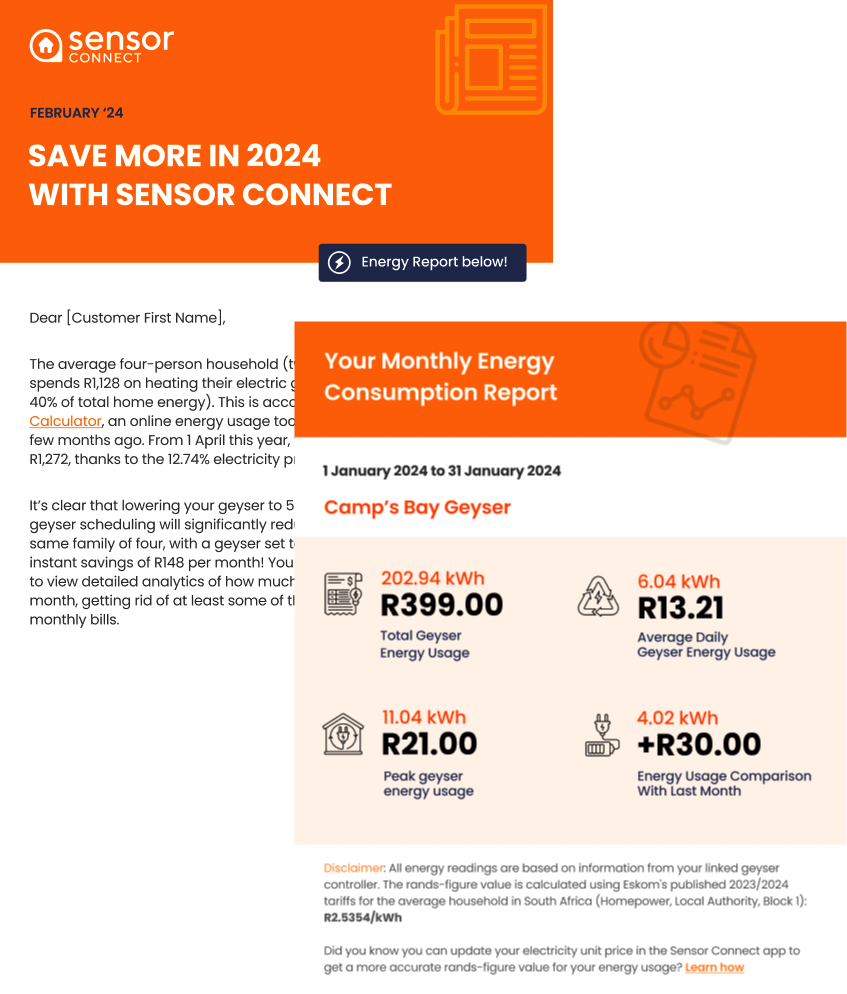
Solar Assist
Powering What Matters, Sustainably
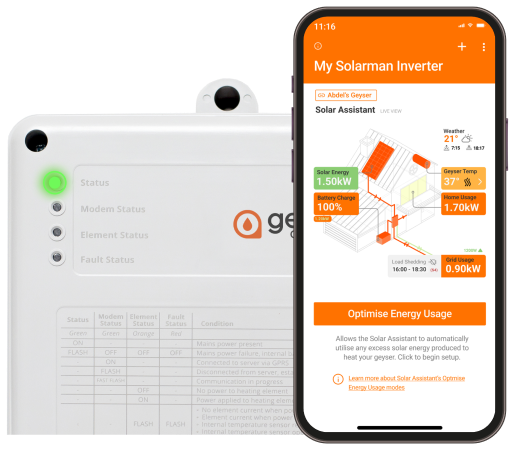
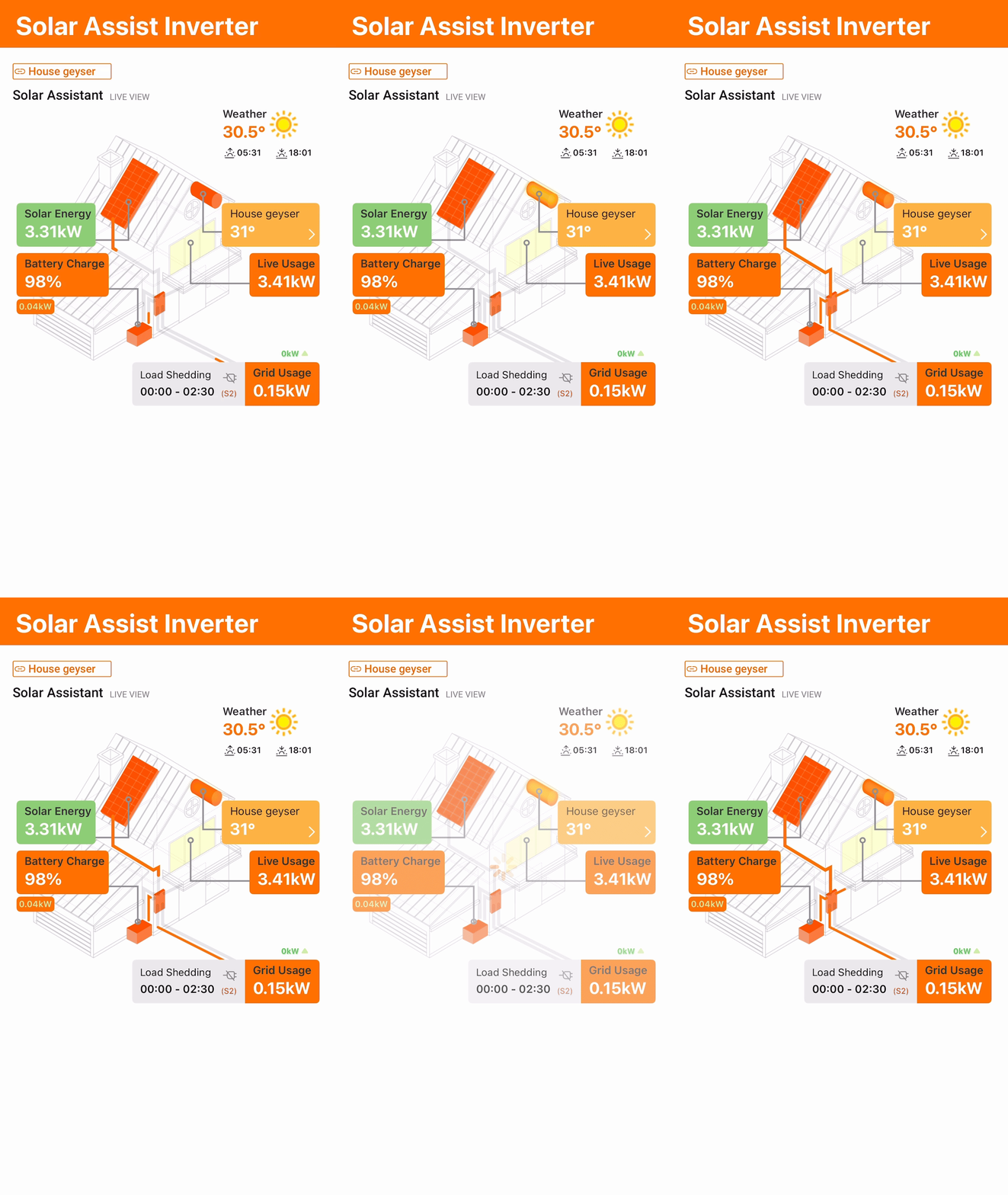
I designed the Solar Assist view in the Sensor Connect app to display real-time energy usage, providing users with clear and actionable insights. Additionally, I led the integration of third-party inverter technology, ensuring seamless compatibility and enhanced functionality.
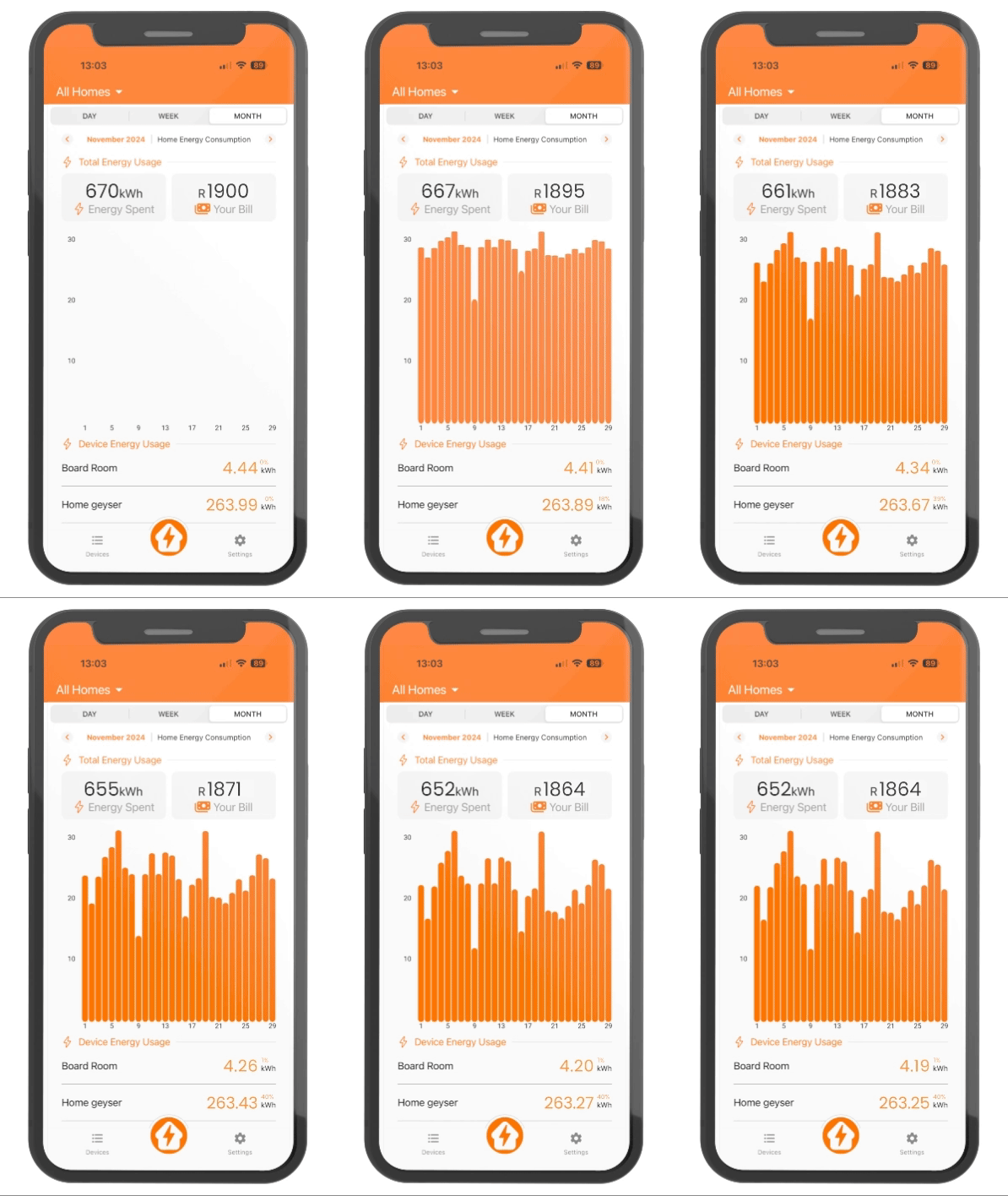
The problems to solve
Standard solar installations in South Africa typically include a single 5kW battery, which is insufficient to support an electric geyser due to its high energy consumption. As a result, geysers are never integrated into household solar systems.
Water geysers are usually connected directly to the power grid, operating independently from the solar installation.
Solar energy generated in households is not always optimally utilised, often resulting in excess energy going to waste.
The Product initiative
Solar Assist is a feature within the Sensor Connect app, designed to help Geyser Connect users optimise water heating by utilising excess solar energy generated in the household.
Through multiple API integrations, the app monitors planned load-shedding (power failures) schedules and real-time home energy consumption. Using a smart algorithm, it intelligently manages water heating to ensure optimal efficiency, minimising reliance on the power grid whenever possible.